Blog

  • Assisted Living vs. Nursing Homes

    Assisted Living vs. Nursing Homes

    As time marches on, many seniors begin to experience physical and neurological health problems that can make it a lot harder, and less safe, to live on their own. When that happens, seniors and their families generally start to consider assisted living.

    You’ve probably heard the term “assisted living,” as well as the term “nursing home.”   But, what’s the difference between the two?  And, which one should you consider when your loved one needs help?   

    According to the Centers For Disease Control (CDC), there are around twice as many assisted living facilities as nursing homes in the United States. Many seniors may need assisted living at some point in their life but many never need to make the transition to a nursing home. Let’s take a look at the difference between the two.

    Assisted Living Facilities

    Assisted living provides assistance for people who may need some help with activities of daily living (ADL’s).  They’re often set up so that couples can move in together. Residents can get help with things like laundry, meal preparation, household cleaning, and personal care, depending on which services they actually need.

    Housing is usually set up like an apartment or a condo, with a good degree of privacy that feels like regular apartment living. Staff are available to provide assistance when necessary.

    Assisted living facilities also organize outings and other activities to keep residents occupied and entertained. Scheduled outings for things like shopping are typical, and in some facilities, residents may be able to have their own car if they’re licensed and capable of driving.

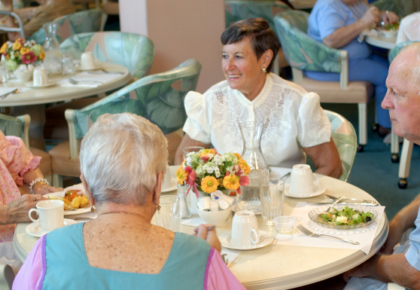
    older senior couple talking to woman

    Nursing Homes

    A nursing home is a facility that provides around the clock care from skilled medical professionals, like nurses and medical assistants. They cater to residents who need a lot of assistance with self-care, and who have more intensive medical needs.

    Many nursing homes also offer rehabilitative services to help people transition from a prolonged hospital stay, before going home. These tend to be relatively long, but ultimately temporary stays. A person might stay at a nursing home in this context if they’ve had a stroke, or sustained an injury like a broken hip.

    There are also nursing homes that specialize in memory care for patients with Alzheimer’s, Lewy body dementia, and other neurodegenerative diseases that cause a long term decline in cognitive and memory functions.

    Nursing homes are more likely to be covered by Medicare and Medicaid due to the fact that they provide skilled nursing care. General assisted living is usually classified by government programs as “custodial care,” and you’ll often have to pay out of pocket, or purchase long term care insurance at some point to help you cover the cost when you need it.

    Choosing the Right Kind of Living Arrangement

    For most seniors with health problems, or who need help with some ADL’s like bathing, dressing and doing laundry, a regular assisted living facility can provide the right level of assistance from staff, along with the degree of independence that active seniors want to have.

    Nursing homes are ideal for people with more serious health issues, who need daily medical care beyond basic things like medication management and transportation to doctor’s appointments.

    Need Help Navigating The Choices?

    Senior Living Options of the Desert is Southern California’s leader in senior living referral. We’ve been helping families find compassionate care for their loved ones since 2004.  We’d be honored to help you and your family.

    Whether you’re looking for independent living, assisted living, memory care, or another form of senior care, our local family advisors will help you find the right option for you and your family. Our mission is to provide families with the best residential care options based on care needs and location, no matter what the budget. And, our services are always FREE.

    You can get more information at www.seniorlivingoptionsofthedesert.com.

  • July 11th – Cheer Up The Lonely Day!

    July 11th – Cheer Up The Lonely Day!

    Loneliness Hurts…

    Loneliness has nothing going for it. It depresses. It hurts. It kills. And, you can do something about it. Every year July 11th is a day set aside to Cheer Up The Lonely. It’s a day to help grow awareness of the lonely and to brighten up their lives a bit.

    According to L.J. Pesek, Cheer Up the Lonely Day was created by her father, Francis Pesek from Detroit, Michigan. She said that he “was a quiet, kind, wonderful man who had a heart of gold. He got the idea as a way of promoting kindness toward others who were lonely or forgotten as shut-ins or in nursing homes with no relatives or friends to look in on them.” Francis Pesek chose this day, because it was his birthday.

    Word got out, and it became a movement. Pesek’s idea was to do something nice for lonely people—those in nursing homes who never get visitors, or who lived alone with no friends; it doesn’t matter. We all know someone who is lonely.

    How You Can Help

    If you know someone who is lonely, see if you can meet them. If it’s a neighbor, you can start with a simple hello, then stop to chat for a few, then keep coming back. Taking the time to get to know somebody like that can enrich both your lives.

    How about volunteering at a local senior center. We have many great senior centers here in the Coachella Valley, Joslyn Center, Mizell Center and the Cathedral City Senior Center to name a few. Contact them to see what kind of programs they run. You might be surprised.

    Cheering up the lonely can take the form of gestures, such as delivering cookies (home-made or otherwise) or knocking on the door, meals-on-wheels style. If you are getting to know the person, offer to take them for a drive somewhere. It will be a treat.

    You can also send flowers to someone for Cheer Up The Lonely Day. Have them delivered to the door as a surprise, or send them anonymously to a nursing home addressed to “someone lonely.” Whatever you do, chances are it will brighten up somebody’s day. And then, once the day is over, don’t stop—carry on what you’ve started, and maybe that person won’t be lonely again.

    If you find yourself being lonely from time to time, take the step to reach out to someone else. Everyone is looking for connections. It will help both of you. So, get out there and Cheer Up The Lonely on July 11th. Then, keep it going!

  • Gay, Aging and Long-Term Care

    Gay, Aging and Long-Term Care

    Aging Is Not The Same For Everyone

    As you are probably aware, the Palm Springs area is becoming a popular place to retire for people in the LGBT community.  With that comes the need for awareness and sensitivity to the different needs of the LGBT population as they age.  I’ve had the privilege of speaking to several groups of LGBT seniors in the Coachella Valley about the different options for long-term care available here.  And, these experiences have opened my eyes to the unique circumstances affecting people who, in many cases, have lived most of their lives in the closet or in fear of someone finding out they are gay.

    I’d like to share a story that a colleague of mine told me recently.  It really highlighted for me just how different the experience is for LGBT seniors as they navigate the healthcare system, as well as the different care options as they age.

    Sally’s Story

    My colleague told me a story about Sally and the day that he met her.  She had just been released from the hospital after a recent fall and needed help with bathing and basic chores around the house.  My colleage is in the in-home senior care business and Sally had just been referred to him.  He was conducting an in-home assessment with her to determine the type of care she needed and to learn a little more about her so that he could match her with the appropriate caregiver.  

    During the assessment, he asked Sally about her support network.  Did she live alone?  Does she have friends or family in the area?  Basic questions like that.  That’s when Sally told him about Margaret.  “Margaret”, she said, “was my business partner”.  Margaret had just recently passed away and Sally had no other support system except for a wonderful neighbor who did as much as she could to help.  He later learned from Sally’s neighbor that Margaret and Sally had lived together for over 50 years.  And, that Margaret was the love of Sally’s life.  My colleague’s heart sank.

    Imagine Not Being Able To Live And Love Openly

    But, this is not uncommon.  Especially as LGBT seniors encounter the health care and long-term care system.  I’ve heard and read many stories about LGBT seniors being mistreated by medical / care workers because of their sexual orientation.  Many LGBT seniors don’t even tell their primary care doctor of their sexual orientation.

    A recent survey by the National Resource Center on LGBT Aging—which provides support and services to lesbian, gay, bisexual, and transgender elders—found that respondents were frequently mistreated by care-center staff, including cases of verbal and physical harassment, as well as refusal of basic services. Some respondents reported being prayed for and warned they might “go to hell” for their sexual orientation or gender identity.

    With same-sex marriage legal nationwide and organizations such as The LGBT Aging Project, a nonprofit that advocates for equal access to life-prolonging services, we should theoretically be living in a golden age for LGBT seniors. Yet the LGBT Aging Center’s survey found that only 22 percent of respondents felt they could be open about their sexual identities with health-care staff. Almost 90 percent predicted that staff members would discriminate based on their sexual orientations or gender identities. And 43 percent reported instances of mistreatment. Meanwhile, few elder-care providers have services directly targeted at helping them.

    Many who won the first civil rights victories for generations to come are now dying prematurely because they are reluctant to ask for help and have too few friends or family to care for them.

    Breaking Down Barriers for LGBT Seniors

    Stonewall Gardens

    So, how do we address this issue?  One of the things I discovered is that there are very few programs or services offered for medical and care professionals that create awareness of this issue.  Things like sensitivity training and partnerships with local LGBT organizations that can shed light on this issue and give them the information and tools to help them.  The aim must be to guard LGBT seniors from being forced back into the closet as they age. The documentary Gen Silent follows the stories of six LGBT senior citizens who must navigate the intricacies of a long-term care system that is unsupportive of LGBT individuals.  They also have a wonderful training curriculum targeted at care facility staff which allows them to get an understanding of what it’s like to age as an LGBT person.  And, just how fearful they are of being discriminated against or mistreated. 

    I will venture to say that most care providers and staff members would never knowingly discriminate against someone because of their sexual identity. But that doesn’t mean LGBT seniors feel like they can be themselves. There’s a difference between wanting to provide a safe environment and actually providing one. What we know about the whole field of cultural competency is that, unless I really understand the person I’m serving, I’m going to provide them with what I personally would like, or what I think they need.

    For example, a well-meaning staff member might accidentally make an LGBT elder uncomfortable by asking certain questions—about spouses, children, or grandchildren—that assume the resident is heterosexual.  Instead, we should encourage people to ask, ‘Who are the important people in your life?’   Even using the word “partner” is more inclusive than using husband or wife.  It doesn’t automatically assume the person is heterosexual.

    LGBT training for long-term care staff can really open their eyes to the experiences and needs of the LGBT community.  The training provides language and terminology to help support and educate staff members who may be struggling with how to best care for LGBT residents.  Although an increasing number of long-term care facilities throughout the country are doing more to reach out to LGBT seniors, significant progress is needed before this becomes a widespread practice.
    Unfortunately, because so many LGBT elders are not comfortable being out, aging service providers often do not realize that they are serving this population and do not recognize that they may need to change their policies and practices to become more LGBT-inclusive.

    Please leave a comment below if you know of others who are making a difference for our aging LGBT pioneers.

  • How Do You Know When It’s Time For Assisted Living?

    How Do You Know When It’s Time For Assisted Living?

    If you’re a caregiver, you most likely wonder if there are certain signs or signals that might indicate when the time is right to consider assisted living for your loved one.  If you are starting to think about it, you are more than likeley feeling the challenge of balancing everything that is going on in your life and are starting to feel overwhelmed.  It might be time to consider some assistance.  But, how do you know when it’s time for assisted living?

    Let’s First Address EmotionsCaregiver Stress

    Families often experience a lot of guilt and anxiety at the very thought of considering placing their loved in in an assisted living facility.  Many have even promised their loved ones years ago that they would never place them in a “home”.  And, many people feel that it is their duty to care for their loved one at home.  I’m sure you’ve heard people say, “Mom took care of me, now it’s my turn to take care of her.”

    Then, there are those who have had a bad experience (or have heard of someone who had a bad experience) with a facility and are afraid of making that decision.  The most common fear or concern is that their loved one will not be cared for as well as they are at home or that placement in a facility will cause them to decline faster.  Quality of life is a huge factor for most families when considering assisted living.  

    Many Times It’s Out Of Your Control

    Occasionally, the decision to place someone in a facility is out of your control.  There may be sudden situations when it’s clear that the time has come for assisted care. These can include:

    • Severe illness
    • Injury
    • Hospitalization/death of the caregiver
    • Hospitalization of the person who needs care
    • Dementia

    These abrupt changes often necessitate immediate placement in a facility. Sometimes, a loved one may end up in a facility almost overnight, with little time to research options.  I get calls all the time from families who have experienced one of these events and have to find a facility immediately.  

    When Do You Know It’s Actually Time?Senior Living Options of the Desert

    Outside of the above sudden situations when it’s out of your control, how do you know when you should consider looking in to assisted living for your loved one?  

    The 13 Signs To Consider:

    1. You’ve injured yourself (such as hurting your back or falling) when trying to lift or move your loved one.
    2. If your loved one has Alzheimer’s and it has progressed to the point where they try to hurt you.  Or, they exhibit other challenging behaviors such as paranoia or anger.  
    3. Your family member has wandered off outside the home and/or has become lost.  
    4. You are falling short of your other responsibilities.  
    5. You exhibit signs of caregiver burnout.  For example, you recently lost your temper when your loved one was resisting getting dressed.  Or, they were following you everywhere you went inside the house.  
    6. Your own health is declining.  This can be either physical or emitional and may include conditions such as high blood pressure, headaches, stomach problems, anxiety, and depression. 
    7. Your relationships are significantly suffering. 
    8. You have surgery or another planned medical procedure coming up.
    9. Your doctor has said that it’s time for assisted living for your loved one.  
    10. Your loved one has care needs that you really can’t handle well, despite your best efforts.
    11. Friends or other family members have expressed concern for you and have encouraged you to look in to other care options for your loved one.
    12. You have tried other in-home care resources but they just aren’t providing enough assistance for you.  
    13. When you determine that assisted living is more cost-effective than what you are paying for in-home care assistance.

    If one or more of these signs sounds familiar, it may be time to look in to a move to an assisted care facility.  You can talk with people you know who might be able to recommend a facility in your area.  Or, you can utilize a free assisted living placement service like Senior Living Options of the Desert who can guide you through the process.    They can save you hours and hours of time researching the best options for you. 

    A Word From Senior Living Options of the Desert

    Thinking about care options for your loved one can be stressful. Although sometimes it feels like you can manage it, there may be other times where you feel like you’re just not able to do it all.

    Many people describe the feeling as if they are drowning in the responsibility and the weight of the caregiver role.  Acknowledging these feelings, however, does not take anything away from the love you have for the person you are caring for.

    Your health and well-being are important in being able to care for your loved one.  Acknowledging that you can’t do everything is ok.  Planning ahead will help you to be there for your loved one and allow you to continue to provide the support they need during the challenges of this journey.  

  • Caregiver Chronicles Featuring Leann Dale

    Caregiver Chronicles Featuring Leann Dale

    Meet Leann Dale

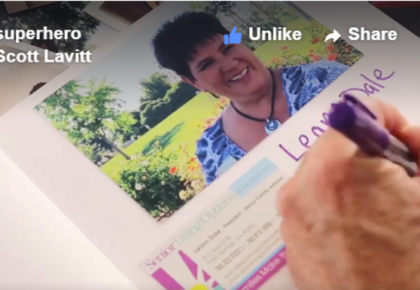
    You’ll feel like you’ve been touched by an Angel when you meet Leann Dale, says Scott Lavitt.   Lavitt, who produces the Caregiver Chronicle series, has highlighted the great work of Leann Dale in his recent video. 

    Check out the video below!

    caregiver superhero

    you'll feel like you were touched by an angel after meeting Leann in this video. enjoy. and please like this page. . this is NOT a paid endorsement. you can contact Leann Dale at Senior Living Options at 760-322-0322. website: https://seniorlivingoptionsofthedesert.com facebook: facebook.com/LeannDaleSLO . music by https://soundcloud.com/dyallas . #Alzheimers #Alzheimer #Dementia #writing #Cooking #ArtTherapy #musictherapy #caregiver #motivation #exercise #creativity #Creative #coreof4 #exerciseforseniors #seniorcenters #endalz #socializing #seniorexercise #alzheimersexercise #exerciseforalzheimers #healthandwellness #Caregiving #SeniorCare #SeniorActivities #laquinta #palmsprings #nursinghome #memorycare #caleobay #legendsgardens #californianursinghome #assistedliving #endalz #alzheimerssucks #caregiversupport #memorycare #caregiverchronicles #alzheimersassociation #alzwalk

    Posted by Scott Lavitt on Sunday, May 19, 2019
  • Finding The Right Care  in the Coachella Valley

    Finding The Right Care in the Coachella Valley

    In case you missed it, Leann Dale of Senior Living Options of the Desert was recently interviewed by Karen Devine of News Channel 3.  Here in the Coachella Valley there are several agencies that help senior citizens navigate all the information on local skilled nursing facilities, assisted living homes and board and care.  The leading agency is Senior Living Options of the Desert.

    Karen Devine from News Channel 3 spoke with Leann Dale, owner of Senior Living Options of the Desert on what to look for when looking for a senior care option.

    “You need to be sure you have someone who can help you out,” says Dale.

    Click here to watch the interview with Leann Dale.

    Leann Knows Senior Care

    Leann Dale, has spent more than a decade doing her homework on local facilities and even though she says there are some really good ones in the valley she’s not surprised about the amount of negative feedback.

    As a family advisor, Dale emphasizes how important it is for her elder clients to have an advocate and to do their research before a crisis happens.

    “Most of us don’t expect to ever be there, honestly it is one of those things where I guess in the back of your mind you figure you’re gonna get old and probably gonna need some help at some point, but that’s a long way out. Well before you know it, a crisis happens, somebody falls and breaks a hip or some dementia or Alzheimers starts to appear.”

    Call An Advocate

    If you are looking for senior care options in Southern California, including Palm Springs and the Coachella Valley, call Leann at Senior Living Options of the Desert.  She and her team have been helping families find the right senior care options since 2004.

    Senior Living Options of the Desert

    • Leann Dale  – (760) 322-0322 or  (760) 898-5139
  • How To Pay For Assisted Living

    How To Pay For Assisted Living

    The cost of Assisted Living Facilities in California can vary from $3,000 – $10,000 per month. The statewide average as of 2018 was $4,070/month. Sometimes people have a false sense of security about what their insurance will pay. It’s important to know right up front that Medicare will not pay for assisted living. But, don’t get discouraged. There are some other options you can investigate.

    You may be able to navigate some of these options yourself. Some senior living communities offer a “financial concierge service” that may be able to help guide you through the process of qualifying for financial benefits. Another option is to speak with a “geriatric planner”. They can save you a lot of time and have a wealth of knowledge in this area. However, if you cannot afford or cannot find a geriatric planner, with a little determination and perseverance you can achieve the same results. Here are the most common ways people pay for Assisted Living. Let’s check them out.

    Long Term Care Insurancelong term care insurance

    If you have a Long-Term Care insurance policy, it should cover assisted living as well. If your policy is designated for home care, you should be able to use it for assisted living too. There are also “facility-only” policies that cover care only in a licensed assisted living or skilled nursing facility.

    Most insurance policies are difficult to understand. It’s important to know what your benefits are so you can ensure you get what you’ve paid for. It is common for insurance companies to decline payment on the first go round. But, don’t let this deter. Many times you, or an advocate at the assisted living facility, will need to contact the insurance company and discuss these issues in order to get approval. Most insurance companies required that you need help with at least two ADL’s (Activities of Daily Living) such as bathing, eating, dressing, transferring from bed to chair, walking, and toileting.

    Long Term Care insurance plans and their respective benefits vary widely depending on the policy. Benefits can range from $1,500 to more than $9,000 per month.

    life insurance

    Life Insurance

    Most people think of life insurance as funds that are not available until after the person’s death. But a life insurance policy can provide financial support now if you need funds. There are several ways that your policy may be used to pay for care while the person is still alive. Ask your Life Insurance Agent about cashing out the policy. They are often referred to as accelerated or living benefits. Typically a company will purchase the policy back for 50 to 75 percent of its value. The rules will be different depending on the company and type of policy. Some policies can only be cashed in if the policyholder is terminally ill while others are much more flexible.

    If the company won’t let you cash it in, you may be able to sell the policy to a third-party company in return for a “life settlement” or “senior settlement”. In this case you can typically expect to receive 50 to 75 percent of the policy’s face value. The third party company will continue to pay the premiums until the policyholder dies at which tie the company received the benefits.

    There are also options called “life assurance” benefits or life insurance conversion programs. These will allow seniors to switch the life insurance policy into long-term care payments. Life insurance conversion typically pays between 15 and 50 percent of the value of the policy. Although this is less than a life settlement, it is an option for lesser-value policies that might not qualify for life settlement.

    Veterans Benefits

    The VA (Veteran’s Administration) can be very generous when taking care of those who served. If you or your loved one is a veteran, you may be eligible for benefits that can be used to pay for residential care. These benefits are known as Aid and Attendance benefits.

    Aid and Attendance benefits are available to veterans, and/or their surviving spouse, who are disabled and whose income is below a certain limit. A veteran must have served at least 90 days on active duty and/or at least one day during wartime (a period of active conflict). The medical condition doesn’t need to be related to your service but you must meet medical qualifications. The average maximum benefit is typically $1,949 a month for married veterans, $1,644 for single veterans and $1,056 for a surviving spouse.

    If you are told that you have too many assets to qualify for this program, you may be able to make some re-allocations or adjustments to your assets without being penalized. Anytime a person tries to “safeguard” their finances or assets, it can be quite tricky. You must make absolutely sure that doing this does not affect eligibility. Ask questions more than once to make sure you understand what to do.

    In order to qualify, you will need to apply through the Veteran’s Administration. In addition to your military discharge papers, you will need to provide a letter from your doctor indicating a valid medical condition that makes you appropriate for assisted living.

    Consider Selling or Renting Your Home

    If you own your home and nobody needs to remain in the home, this can be a valuable resource. Selling a family home is a difficult decision for many people to make and some aren’t quite ready to take that step right away. If that’s the case, consider renting the home which will give you a monthly income that could cover the cost of assisted living.

    Reverse Mortgage

    If you own your own home and your spouse still needs a place to live, a reverse mortgage might be just the option for you. A reverse mortgage allows you to borrow money on the equity you have built up in your home. Then, when the last person is gone from the home, the money needs to be repaid which usually means selling the home. As with any major financial decision, make sure you do your homework and understand what you are getting in to. It is a viable option for many but not for everyone.

    Bridge Loan

    If you have trouble liquidating assets quickly, a short term loan may be able to help bridge the gap. These loans are typically available up to $50,000 and designed to fund the move to an assisted living facility. They are usually used while waiting for the sale of a property or while waiting to be approved for a pension.

    Private Pay

    Personal income or savings is the simplest route to pay for assisted living, but the cost can quickly deplete your savings. If you have investment portfolios such as a 401k or an IRA, you may want to consider cashing in on those. Often paying out-of-pocket is beyond what many can afford for very long. However, when all your resources have been exhausted, you can apply for Medicaid.

    Annuity

    If you have a sizable savings but are worried about outliving your resources, you may wish to consider an annuity. With an annuity, you pay a lump sum to an underwriter and then you receive regular payments over a specified period (usually for the rest of your life).

    This is one way you can stretch out your money and make sure that you will always have some money coming in even if you live longer than expected. The benefit of an annuity is that you may bet back more money than you put in. The underwriters hope to make a profit off you if you die early. They take the risk that you could live longer. It can be more beneficial for you than just spending your money on the cost of the stay. Annuities can be complex so always consult with a financial adviser to assist you.

    Conclusion

    I hope this has given you some options to consider when deciding how to pay for assisted living. If you have any questions, please feel free to contact me. If I can’t answer your question I can put you in touch with the right resource who can.

  • Socialization in Assisted Living Can Improve Senior Health

    Socialization in Assisted Living Can Improve Senior Health


    As we age, it’s normal to lose social connections along the way. According to Greater Good Science Center at UC Berkeley, we lose ‘social capital’ as we age.  This is usually due to retirement, friends and family members moving away, or losing them to illness and death.  

    This normal decrease in daily social contacts has a negative impact on our health, both physical and mental.

    Fortunately, there are ways to change this. Friendships and regular socialization improve overall health.

    A study published in The Journals of Gerontology found that senior assisted living communities that are well-designed can improve socialization, happiness, and quality of life. Providing your older adult with more opportunities to be social, like living in an assisted living community, may help them thrive.

    The benefits of socialization for seniors

    Being social has a significant influence on senior health and well-being. Many studies have shown that there are positive effects of socializing for seniors, including:

    Improved mental health

    Older adults often experience cognitive decline or the symptoms of depression. Studies show that more than 7 million seniors are dealing with symptoms of depression.

    There are other studies that show consistent interaction with people helps   reduce the risk of depression and dementia in older adults.

    Better nutrition

    When seniors live alone they are more likely to suffer from malnutrition.  Friendly, lively social interactions with others can improve appetite, nutrition and overall health in older adults.

    Improved physical health

    A socially active life can also have additional health benefits – less physical pain, lower blood pressure, and even a better immune system.  

    Loneliness can increase health risks

    According to Seniorly, older adults who live at home may still be dealing with loneliness. Even with in-home care, they may not be getting the amount of contact and communication they need.

    Forbes reports that loneliness could be even a bigger health risk than obesity or smoking.  There is another study showing that social isolation increased the risk of death by as much as 30%.  Seniors who are isolated socially often experience higher mortality rates as well.  

    For many aging adults, the key to increasing socialization may be to attend an adult day program, move to an assisted living community, or consider another type of senior housing.

    Assisted living communities help increase socialization

    Assisted living communities make it easier for residents to socialize with their peers.

    There are plenty of common areas where people can gather as well as structured activities like games, cultural events, dancing, field trips, and more.

    The New York Times reported that levels of loneliness and social isolation are growing among seniors and it’s taking a toll on physical and mental health. The article notes that many elders benefited from living in retirement communities because of the shared activities, convenience, and larger number of potential friends with similar interests.


    About Senior Living Options of the Desert

    Senior Living Options of the Desert is Southern California’s leader in senior living referral. We’ve been helping families find compassionate care for their loved ones since 2004.

    Whether you’re looking for independent living, assisted living, memory care, or another form of senior care, our local family advisors will help you find the right option for you and your family. Our mission is to provide families with the best residential care options based on care needs and location, no matter what the budget. And, our services are always FREE.

    You can get more information at www.seniorlivingoptionsofthedesert.com.

  • What Happens When The Caregiver Dies First?

    What Happens When The Caregiver Dies First?

    This is a question I’ve been thinking about a lot lately. In my business, I oftentimes speak with family members who are looking for a senior care option for their loved one. Quite often they are contacting me when there is a crisis and the primary caregiver for their loved one is no longer able to care for them. I have also been approached by caregivers who ask me what would happen to their loved one if they died first? This is a question that many people don’t want to think about, which is quite understandable. But, realistically it needs to be addressed. So, what happens when the primary caregiver dies first?

    The Statistics

    Caring for a loved one takes a tremendous toll on the health and well-being of the caregiver. I’ve seen many research studies showing that many caregivers neglect their own health while caring for their loved one. In fact, studies show that caregivers are at a much higher risk than others for diabetes, depression, stroke and other illnesses.

    There is an often cited study from 1999 that found caregivers have a 63 percent higher mortality rate than non-caregivers and that 40 percent of Alzheimer’s caregivers die from stress-related disorders before the patient dies.

    That alarms me. Why is this happening?

    A Friend’s Story

    My friend Vic told me recently about his biggest fear while caring for his mother. His mom had Multiple Sclerosis and also had a stroke, which left her paralyzed from the neck down. She needed 24-hour care with all activities of dailiy living including transfers, bathing, toileting, feeding, and dressing. Vic worked a full-time job and had a caregiver come in for 8 hours during the day while he was at work.

    There were many days when Vic was not able to be home right at 5:00 when the caregiver left. There were times when he got home, even if it was only 30 minutes after the caregiver left, when he found his mom hanging over the side of her wheelchair yelling for help as he walked in the door. The pillow that was propping her up had fallen and she was not able to pull herself back up. That got him thinking about what would happen if he didn’t come home at all. What if he was in an accident on the way home? What if he never came home?

    That’s when he decided that he needed a back-up plan. So, he talked with his neighbors across the street about his concerns. They worked out a system where his neighbors would have a key to his house and, if they saw that he was not home at a certain time, would go in to his house and make sure his mom was ok. There were several times when “the neighbor plan” kicked in and they went to check in on his mom. Usually Vic was able to call them to let them know he was running late. But, they became part of his “care team” and provided much needed peace-of-mind.

    What If You Don’t Have a Support System?

    I worry about those who don’t have a local support system. Many of our residents here in the Coachella Valley have family who don’t live in the area. And, when you’re are caring for someone 24/7, you may not have a robust social life or a large network of friends. What is your plan if something unexpectedly happens to you? Now is the time to think about that.

    Create a Succession Plan

    In business, succession planning is the process of training and developing employees to ensure that someone qualified will take over when the company expands or employees leave.

    While caregiving is not a business, there are many times that caregivers can benefit from operating like a business. Effectively managing finances, keeping current with insurance plans and legal documents and, in cases of long-term caregiving (especially for the aging caregiver), being sure someone is ready to take over in the event of an emergency. All of this is important.

    What is your succession plan?

    Be Prepared For an Emergency

    Deciding how your loved one will be cared for if you should fall ill or die should be a decision you make well in advance and, if possible, with your family’s help. Talking openly about this possibility and planning for it can prepare everyone for the worst case scenario and provide peace-of-mind that there is a plan in place during a stressful transition time. Here are a few common sense guidelines to help you approach this difficult subject:

    • Talk about it while you are healthy as a “just in case” discussion. 
    • If you can involve other family members, try for consensus.  
    • If needed, guardianship should be decided and legal papers drawn up so there is no quarrel later.
    • Create a file box with all medical information regarding your loved one’s care.
    • If there are no other family members who are willing or able to take over your caregiving responsibilities, work on creating a plan with your loved one (if feasible), and possibly an attorney.
    • Decide if you will use paid home care, a nursing home, assisted living, or a group home in accordance with your loved one’s wishes, level of independence, and your financial constraints. Contacting the party you choose in advance for a consultation on what to expect may be helpful as well.

    Planning for an unexpected emergency is never easy or comfortable.  But, in the long run, it can save a lot of heartache. Check this box off your caregiving to-do list, and you’ll feel better, too!

    What Is Your Plan?

    Please let me know what your succession plan is.  Or, what your emergency plan is should something happen to you.  I know others would be interested in knowing how you are tackling this difficult topic. 

  • Reason To Hope Luncheon

    Reason To Hope Luncheon

    The Alzheimer’s Association Presents

    The Inaugural Reason To Hope Luncheon

    On Thursday, April 4, 2019, the Alzheimer’s Association will hold their inaugural Reason to Hope luncheon at the Indian Wells Golf Resort event pavilion.  The event will include a silent auction, guest speakers, plated lunch and of course, the unbelievable views that this extraordinary venue offers.

    Please join me in support of the Alzheimer’s Association and invite your colleagues, friends and loved ones to join us for a fabulous event.  Be a part of bullding a hopeful future for the prevention and treatment of Alzheimer’s disease.

    The Alzheimer’s Association has been serving the Coachella Valley for 20 years with free programs and services, education and outreach, care and support while also supporting advocacy and public policy and the research that will one day find a cure for Alzheimer’s disease.

    Event Details

    Thursday, April 4, 2019

    11:30 am – 2:30 pm

    Indian Wells Golf Resort | 44-500 Indian Wells Lane | Indian Wells, CA  92210

    (760) 346-4653


    Tickets

    Tickets for the event are $125.00.  The price for a table (10 seats per table) is $1,250.00.     

    Donate To The Cause

    If you are not able to attend the Reason To Hope Luncheon or simply want to support our mission, please donate to help our cause.

    Thanks For Your Support

    As many of you know, I am on the Advisory Council for the Alzheimer’s Association and I truly love the work we are doing to end Alzheimer’s Disease.  I’d like to thank you in advance for supporting out mission.  I hope to see you on April 4th!

    -Leann